Looking beyond conventional treatments and exploring the bigger picture.

If you've been living with rosacea for years, there's a good chance you've already tried a lot.
Dermatologists, prescription creams such as Soolantra (ivermectin) and Rozex / Metrogel (metronidazole), oral antibiotics such as doxycycline, perhaps even Roaccutane (isotretinoin), and even laser / IPL. You've experimented with skincare, changed your diet, investigated your gut health, tried supplements and spent countless hours researching what could possibly be driving your skin condition.
And yet, you're still here.
Perhaps your skin improves for a while, only to flare again. Perhaps the pustules have settled, but the persistent redness remains. Or perhaps you've made significant changes to your gut health but haven't experienced the lasting improvement you were hoping for.
I understand this frustration more than you might realise.
I've spent over seven years navigating rosacea myself. I've been through the treatments, the dietary changes, the health investigations and more internet rabbit holes than I'd care to admit.
But one of the biggest turning points in my understanding of rosacea wasn't another supplement, skincare product or dietary change.
It was discovering the gut–brain–skin connection.
And more specifically, understanding the role of the brain and nervous system in the bigger picture of skin health.
I began to realise that perhaps I'd been looking at individual pieces of a much bigger system.
If you've tried seemingly everything and still feel like something is missing, here's another perspective worth exploring.
1. Rosacea is more complex than a skin condition alone
One of the things I found most frustrating throughout my journey was how little I understood about what was actually happening inside my body.
When I first sought help, the conversation was largely centred around my skin. I was offered prescription treatments, advised on managing triggers and told that rosacea was a chronic condition.
But very little was explained about the physiology behind it.
What I eventually learnt is that rosacea is a multifactorial inflammatory skin condition involving several interconnected processes.
These include:
Dysregulation of the innate immune system.
Neurovascular signalling and blood vessel reactivity.
Inflammatory signalling pathways.
Skin barrier dysfunction.
Interactions with the skin microbiome.
Interactions with the gut microbiome.
Genetic susceptibility.
In other words, there's a lot happening beneath the surface.
Research increasingly explores how these different mechanisms interact, rather than viewing rosacea as a condition with one isolated cause.
This is important because it changes the questions we start asking.
Instead of only asking which cream might reduce redness, or which food might be triggering inflammation, we can start exploring the wider physiological environment in which rosacea develops and persists.
2. The gut–brain–skin connection: the missing piece?
This was single-handedly the most significant discovery in my entire rosacea journey.
The gut–brain–skin axis.
I'd heard about the gut–skin connection long before I understood the gut–brain–skin connection.
I became very focused on my gut health. I investigated digestive issues, explored potential imbalances, changed my diet and experimented with supplements.
I understood that the gut could influence the skin. What I hadn't learnt was the central role of the brain in this relationship.
The gut, brain and skin don't operate independently. They communicate through interconnected neural, immune and endocrine signalling pathways.
And importantly, this communication is bidirectional.
It isn't simply that what's happening in your gut affects your skin, or that stress affects your digestion. Signals travel in multiple directions.
The brain influences digestive function, immune activity and stress responses. The gut communicates with the brain through neural, hormonal and immune pathways. And the skin itself contains an extensive network of sensory nerves and immune cells that communicate with the wider nervous system.
A 2026 narrative review published in Life explores this relationship specifically in the context of rosacea, bringing together research on gut microbiota, neuroimmune signalling, autonomic nervous system activity and neurovascular pathways.
It's a fascinating area of research and one I believe deserves considerably more attention in the rosacea conversation.
It also raises an important question:
If we're focusing exclusively on improving gut health through food and supplements, are we overlooking other systems that are communicating directly with it?
This doesn't mean gut health isn't important. It means it shouldn't necessarily be viewed in isolation.
3. What role does the nervous system play in rosacea?
This is the area that genuinely changed how I understood my condition.
Neural pathways are involved in regulating many of the physiological processes relevant to rosacea, including vascular responses, immune signalling and inflammatory activity.
Our skin also has a sophisticated sensory nerve network.
These nerve endings can respond to temperature, environmental stimuli and other signals, releasing neuropeptides and other messengers that influence local blood vessels and inflammatory processes.
This is one of the mechanisms explored under the term neurogenic inflammation.
For some people with rosacea, this neurovascular component may be particularly relevant to symptoms such as flushing, burning, stinging and heightened skin sensitivity.
Stress physiology is another part of this picture.
When we experience stress or perceive a threat, the nervous system coordinates a range of physiological responses. These can influence blood vessel activity, hormonal signalling, immune function and digestion.
Research into rosacea is now increasingly recognising the relationship between neurovascular and immune dysregulation.
This means that the nervous system deserves a place in the broader conversation.
Understanding this helps explain why the nervous system deserves consideration alongside the other biological processes involved in the condition.
4. When managing your rosacea becomes another source of stress
There's another part of this conversation that I think is often overlooked.
Living with a visible, unpredictable and sometimes distressing skin condition can change the way you relate to your body.
I know this from personal experience.
When you've spent years trying to understand why your skin is behaving the way it is, it's easy to become consumed by it.
You might find yourself:
Constantly checking your reflection to see whether your redness has changed.
Monitoring everything you eat in case it triggers a flare.
Avoiding certain temperatures, environments or activities for fear of triggering a flare.
Feeling enormous pressure to find the next solution.
Struggling to switch off from researching, monitoring and analysing your condition.
Over time, the process of managing rosacea can become incredibly consuming.
And this is where I think we need to introduce another important concept: the relationship between threat perception and the nervous system.
When something repeatedly causes distress, we can become increasingly attentive to it.
For someone living with rosacea, their skin may become a constant source of perceived threat. Every change in redness, every new bump or sensation can trigger another cycle of checking, analysing and anticipating.
The skin symptoms are real. The distress is real.
But the experience of living with the condition can also influence how we respond to it.
This is an area worth exploring through the lens of stress physiology, attention and brain–body communication.
It also highlights why managing rosacea shouldn't become an endless exercise in monitoring, restricting and controlling every aspect of your life.
When we've spent years responding to our skin as a potential threat, these patterns of attention and anticipation can become deeply ingrained. This is where approaches such as brain retraining can be valuable, helping us gradually change learned responses and develop a different relationship with our symptoms.
This isn't about convincing yourself that your rosacea isn't real, or simply thinking positively. It's about understanding how the brain responds to ongoing experiences of distress and learning to work with those responses rather than remaining caught in the cycle.
5. It's not always about finding the one root cause
One of the biggest challenges throughout my journey was believing that if I could just find the one underlying imbalance, everything would fall into place.
I went down countless holistic health rabbit holes.
Was it my gut? Was it a nutrient deficiency? Was I consuming something inflammatory? Did I need to eliminate another food? Was there something I needed to detox?
I had tests, investigated different health pathways and continually searched for the missing piece.
I was convinced that if I could just identify the problem and correct it, my skin would finally improve.
But I eventually began to realise that I was looking at individual pieces without understanding how they might connect.
At the time, I hadn't been introduced to the broader relationship between the gut, brain and skin, or understood the role of the central nervous system in this communication.
Rosacea is multifactorial. There isn't necessarily one universal root cause, one imbalance or one supplement that explains everyone's experience.
Different people have different presentations, contributing factors and treatment needs.
For some, gut health and digestive function may be important areas to explore. For others, Nervous system regulation and understanding stress responses may be a priority. Skin barrier support may also be relevant.
And for many, several of these areas may overlap and influence one another.
This is why I believe in a broader, more considered approach.
Rather than continually searching for one thing to fix, it's worth understanding the different areas that may be contributing to your experience, how they interact and what support might be appropriate for you.
6. What does a more comprehensive approach to rosacea look like?
For me, this has been one of the biggest shifts in my entire journey.
It's about understanding where different interventions fit, what they can offer and, just as importantly, what their limitations are.
Skincare has a place.
Supporting the skin barrier, using appropriate skincare and protecting the skin from UV exposure can all be valuable.
Medical treatments can have a place, too.
Prescription treatments such as Ivermectin can target specific features of rosacea and help manage inflammatory lesions.
Nutrition has a place.
Rather than approaching food through constant elimination and restriction, I became much more interested in nutritional diversity, digestive health and supporting a healthy gut microbiome.
And then there's the brain and nervous system.
Understanding stress physiology, developing awareness of our responses and exploring emotional patterns can be another valuable part of supporting overall wellbeing.
These approaches don't need to compete with one another.
They can be complementary.
I think the most important thing is to stop expecting any single intervention to do everything.
7. Understanding the emotional patterns beneath the surface
There's one final area I want to introduce because it's become such an important part of my work.
When we talk about nervous system regulation, the conversation often focuses on physical practices.
Breathwork, meditation, humming, movement and other techniques can all be supportive.
But I believe there's a much bigger conversation to be had around the patterns we develop in response to our experiences.
For example, perhaps you put enormous pressure on yourself, are constantly critical of yourself, struggle to switch off, feel the need to stay in control or find it difficult to trust your own instincts.
These behaviours can sometimes reflect learned protective patterns that developed over time.
They may have existed long before rosacea appeared.
And then there's another layer mentioned earlier: the responses we develop as a result of living with a chronic skin condition.
The constant checking, anticipation, self-consciousness and hyperawareness that can develop when your skin becomes a source of ongoing distress.
This is where emotional awareness, psychological support and approaches such as brain retraining may be worth exploring.
For me, this has been one of the most significant parts of my own journey.
8. You don't have to spend the rest of your life consumed by rosacea
If there's one thing I wish someone had explained to me seven years ago, it's that having a genetic predisposition to rosacea doesn't mean you're powerless.
Rosacea is viewed as a chronic condition, and there isn't currently a universal cure. But chronic doesn't mean that your skin has to remain severely affected forever.
Meaningful improvements are possible, and I believe understanding the bigger picture can make a significant difference to how effectively you manage the condition.
When you have a better understanding of the factors that may be influencing your rosacea, you have more options available to you. You can make more informed decisions about where to focus your attention, what areas may need support and how different approaches might work together.
Rather than relying on one treatment or addressing isolated symptoms, you're able to consider the broader picture and avoid overlooking important pieces.
For me, this changed everything. I began to understand my body differently, make more considered decisions and feel less at the mercy of my skin.
There is room for a different relationship with rosacea.
One where you understand your condition, feel more confident in how you manage it and no longer feel that every change in your complexion needs to dictate how you feel about yourself.
You can have an occasional flare without feeling like you've gone backwards. You can eat without fear, socialise and enjoy your life without rosacea occupying so much of your mental space.
You may not be able to control every aspect of rosacea, but you can become much better equipped to understand and manage it.
And I think that's a really important place to start.
Where to from here?
My own journey has taken me through conventional treatments, gut health investigations, nutritional changes, psychology, nervous system education and eventually specialised kinesiology.
What I've learnt is that rosacea deserves a much broader conversation.
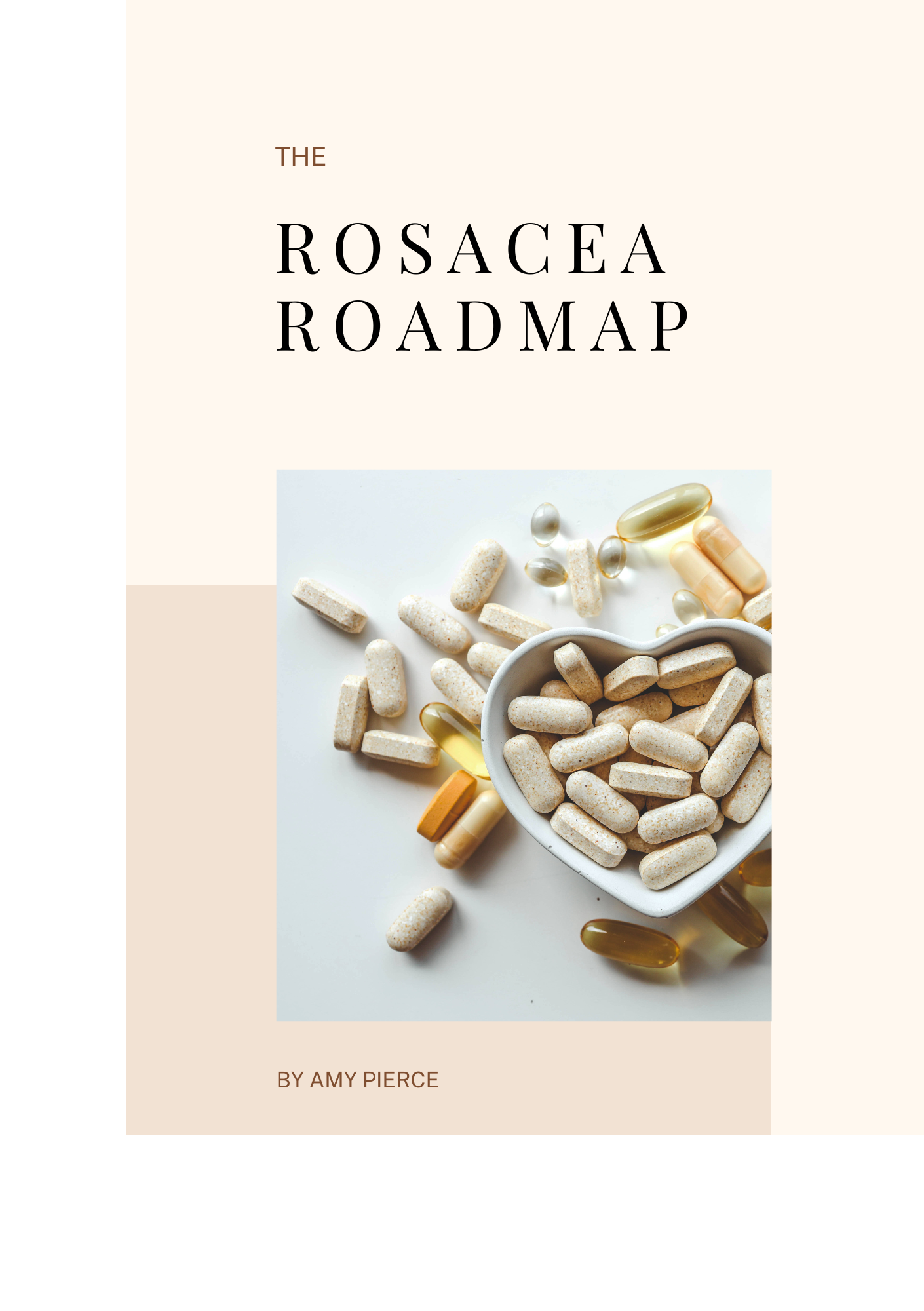
That's why I've created the Rosacea Roadmap: an educational resource bringing together the areas I've spent years researching and exploring, including the gut–brain–skin connection, nervous system, digestion, nutrition and emotional wellbeing.
I also offer individual rosacea support sessions and Specialised Kinesiology sessions for those interested in exploring the emotional and behavioural patterns that may be influencing their stress responses.
My intention isn't to replace dermatological care or promise a cure.
It's to help people understand the bigger picture, explore additional areas of support and feel less alone in navigating this condition.
My hope is that by sharing what I've learnt, others won't have to spend years searching for answers that I wish I'd found sooner.
You deserve to understand your body, have hope and feel like your life belongs to you again.
Amy Pierce is an energy practitioner and creator of the Rosacea Roadmap. She shares educational information and personal experience exploring the gut–brain–skin connection and broader approaches to rosacea support. Her work does not replace medical diagnosis or treatment.
Want to explore these connections further?